What is agentic AI?
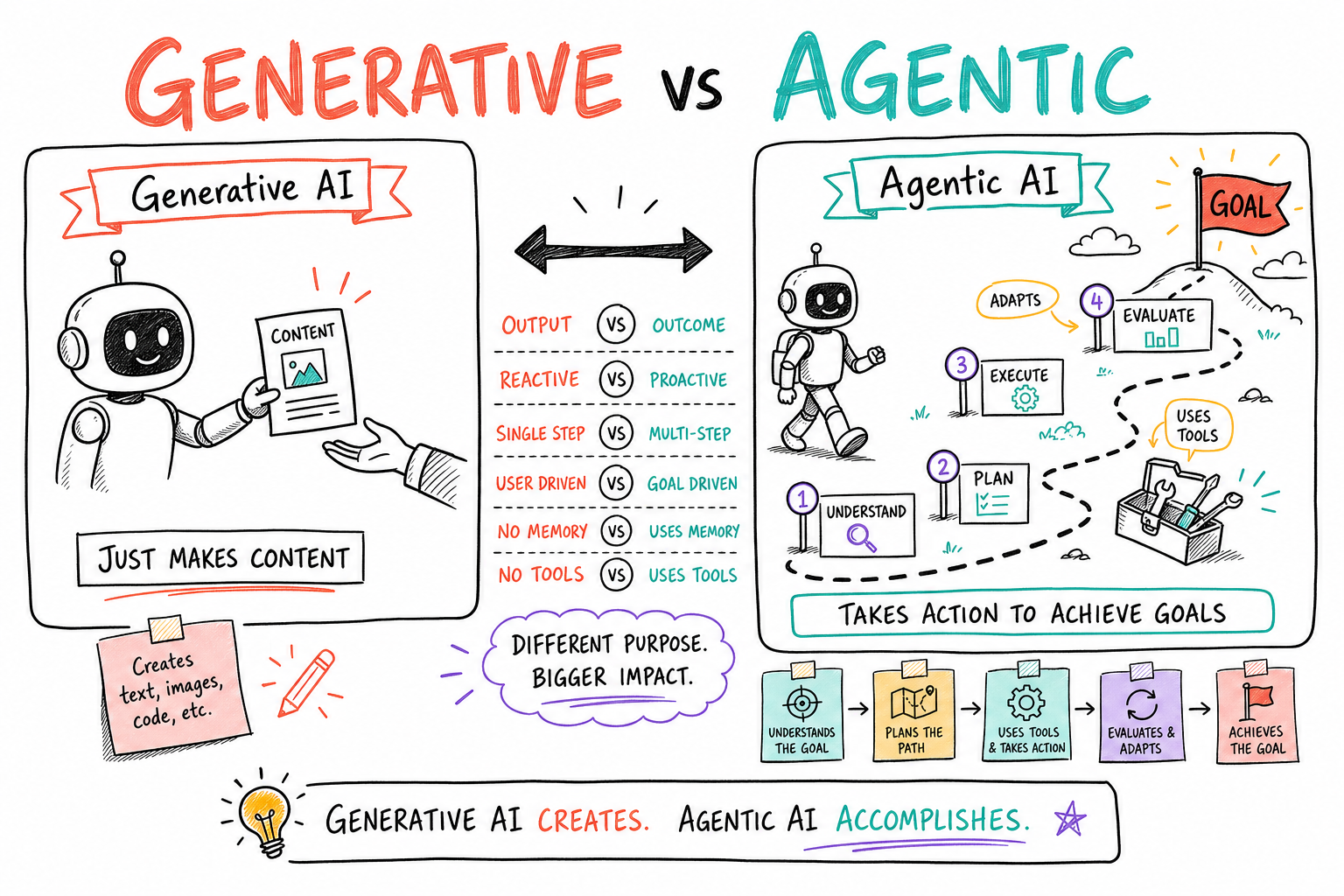
Generative AI makes stuff: text, images, code, when you ask. Agentic AI goes further. It is a system of AI agents that perceive a situation, decide what to do, and take action toward a goal with little supervision. The word that matters is autonomy: it does not just answer, it acts and keeps going until the goal is met.
- Generative AI = makes content when prompted.
- Agentic AI = perceives, decides, acts toward a goal on its own.
- Most real agents are compound systems: model + retriever + tools + a checker.
The 5 agent types (a ladder)
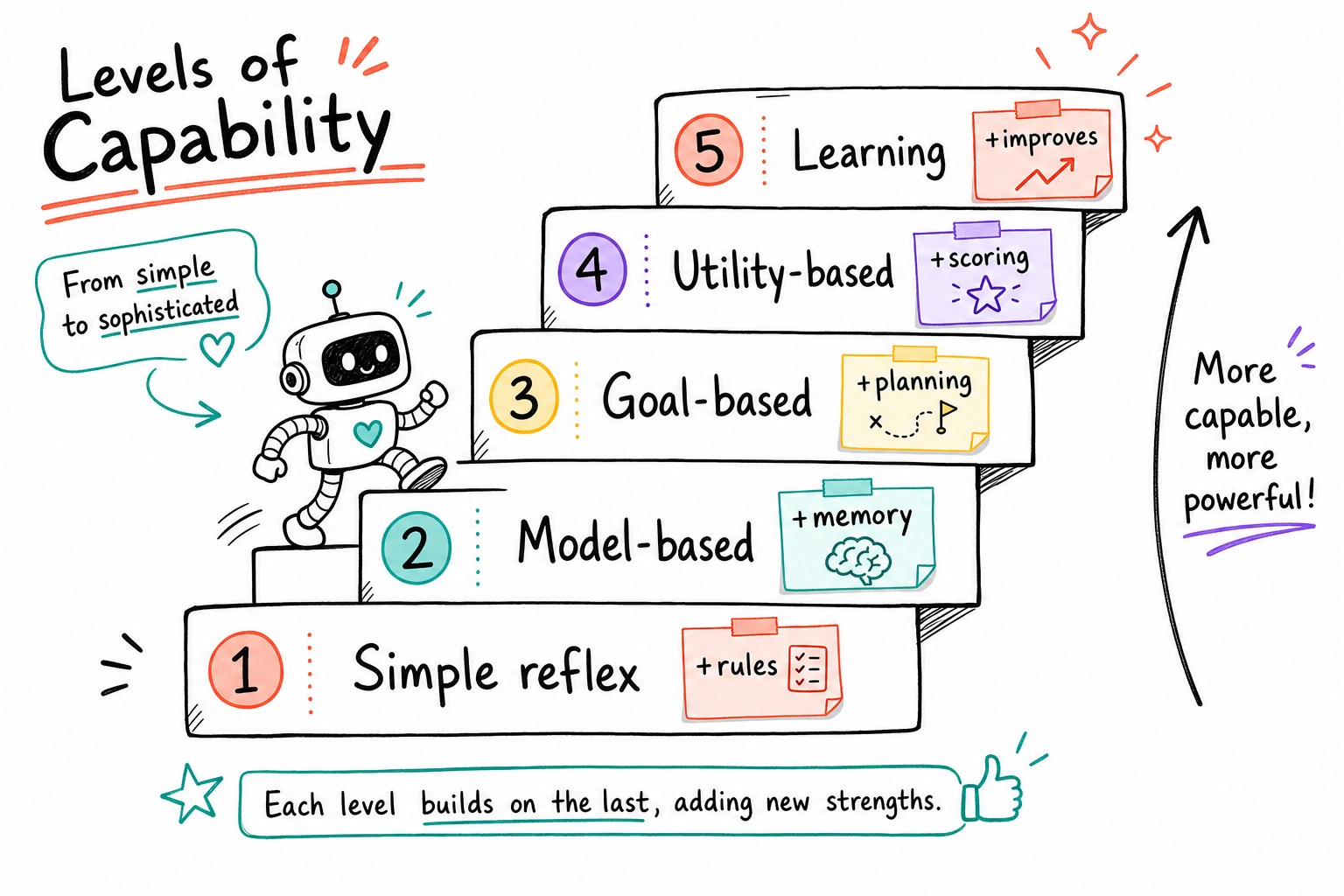
The industry sorts agents into five types, least to most capable. They stack: each rung adds one ability. When anyone says AI agent, put their thing on this ladder first. Most marketing agents are really rungs 1 to 3 wearing a costume.
- 1. Simple reflex: if-this-then-that. No memory. (a thermostat)
- 2. Model-based reflex: adds memory + an internal model of the world.
- 3. Goal-based: adds planning toward an explicit goal. First true agent.
- 4. Utility-based: scores outcomes and picks the best tradeoff.
- 5. Learning: improves itself over time.
ReAct vs ReWOO (why it matters for cost)
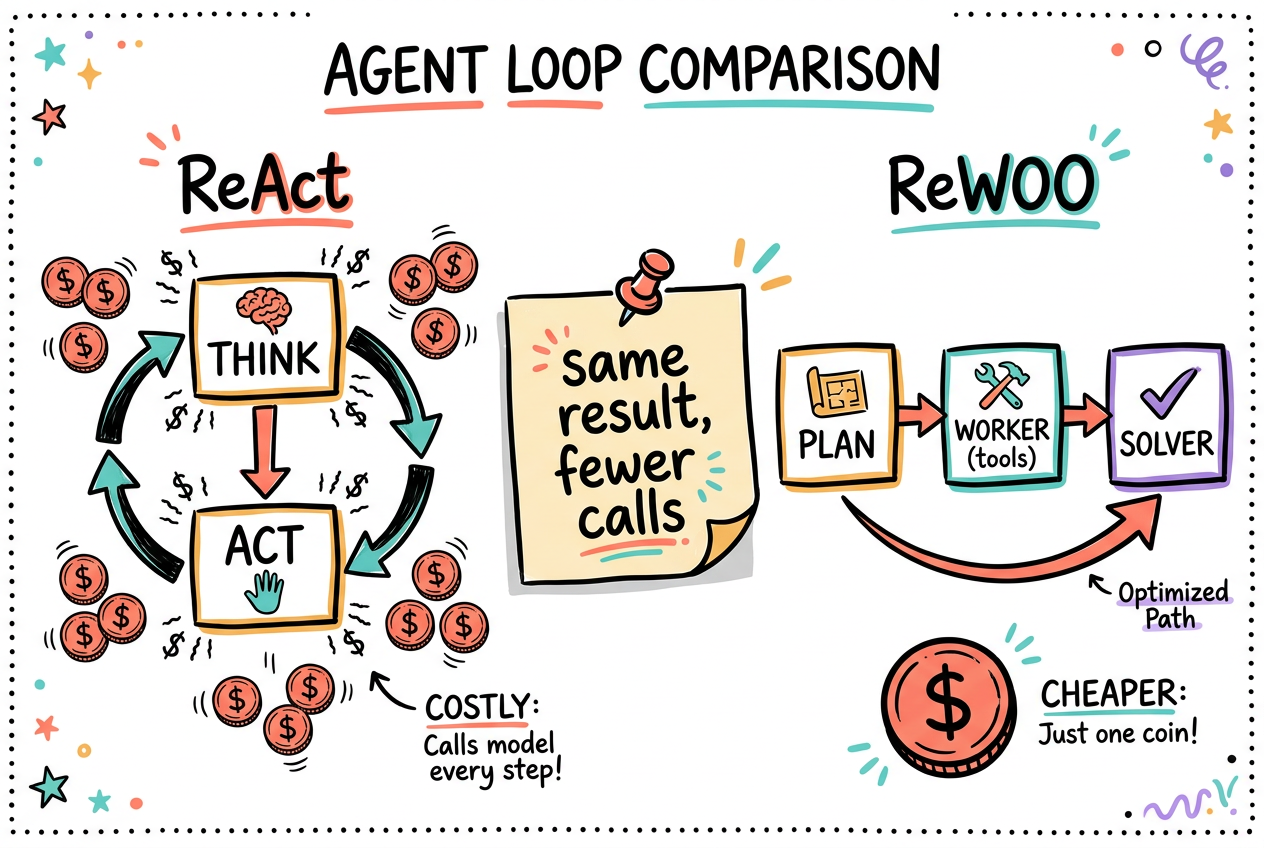
Two ways to wire an agent's thinking. ReAct improvises: think, do one thing, think again, do another, over and over, calling the expensive model at every single step. ReWOO writes the whole recipe first, then cooks: Plan once, a Worker runs all the tools, a Solver writes the final answer. Same quality, far fewer expensive calls. Your ADWs already work the ReWOO way.
- ReAct: think and act in a loop. Flexible but calls the model every step.
- ReWOO: Plan, then Worker runs tools, then Solver answers.
- ReWOO = same result, lower token cost. Your ADWs match this.
Agentic AI concepts (the words)
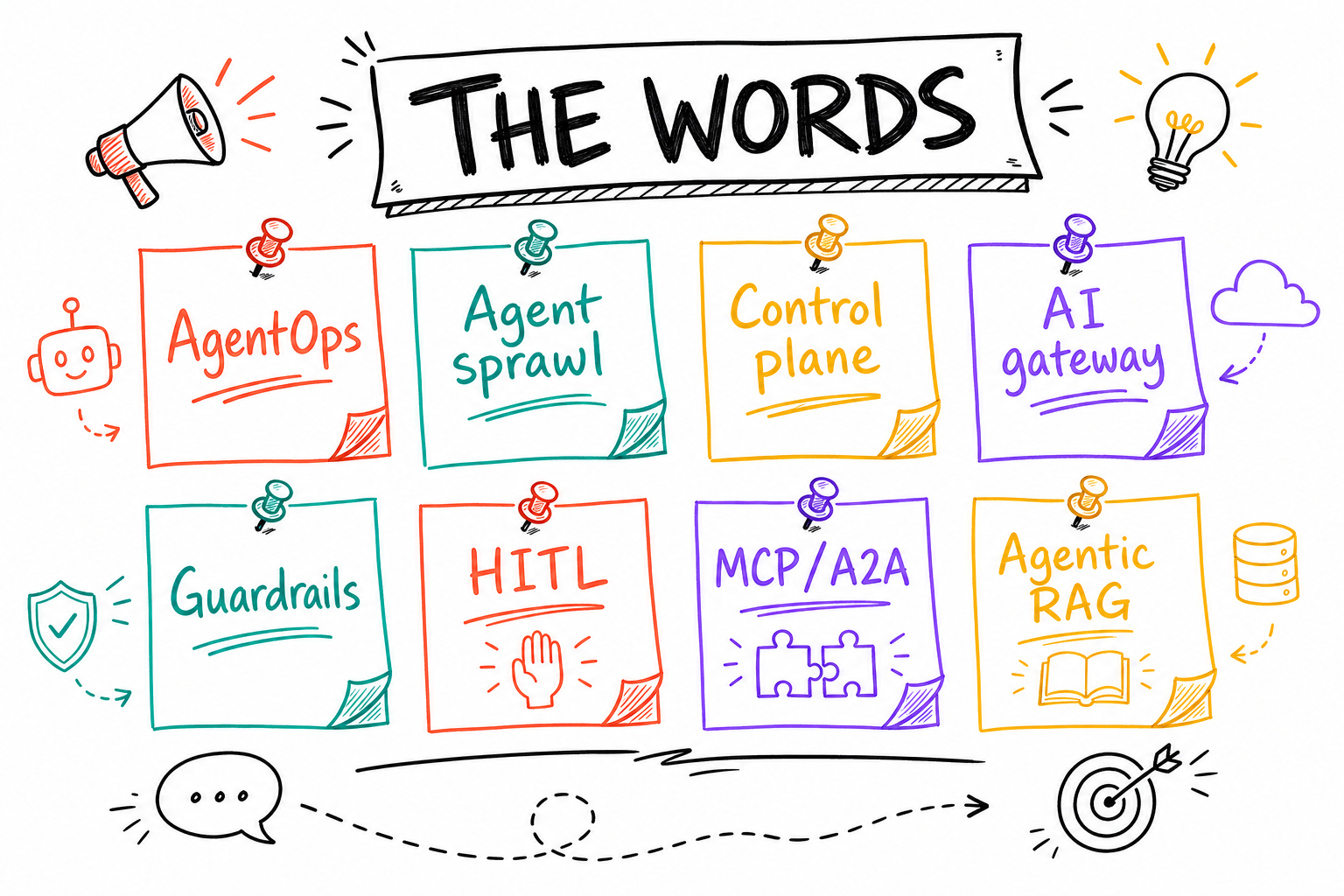
The terms that get thrown around. You already do most of these, you just did not have the words. Here is the quick glossary so you can name your own system in industry language.
- AgentOps + evaluation: deploy, monitor, score agents (DevOps for agents).
- Agent sprawl: too many agents, no governance. The big enterprise risk.
- Control plane vs data plane: the boss layer vs the agents doing the work.
- AI gateway: one layer that routes + governs all your model calls.
- Guardrails + HITL: safety rules + human checkpoints.
- MCP / ACP / A2A: standards for agents to reach tools and talk to each other.
3 layers people mix up
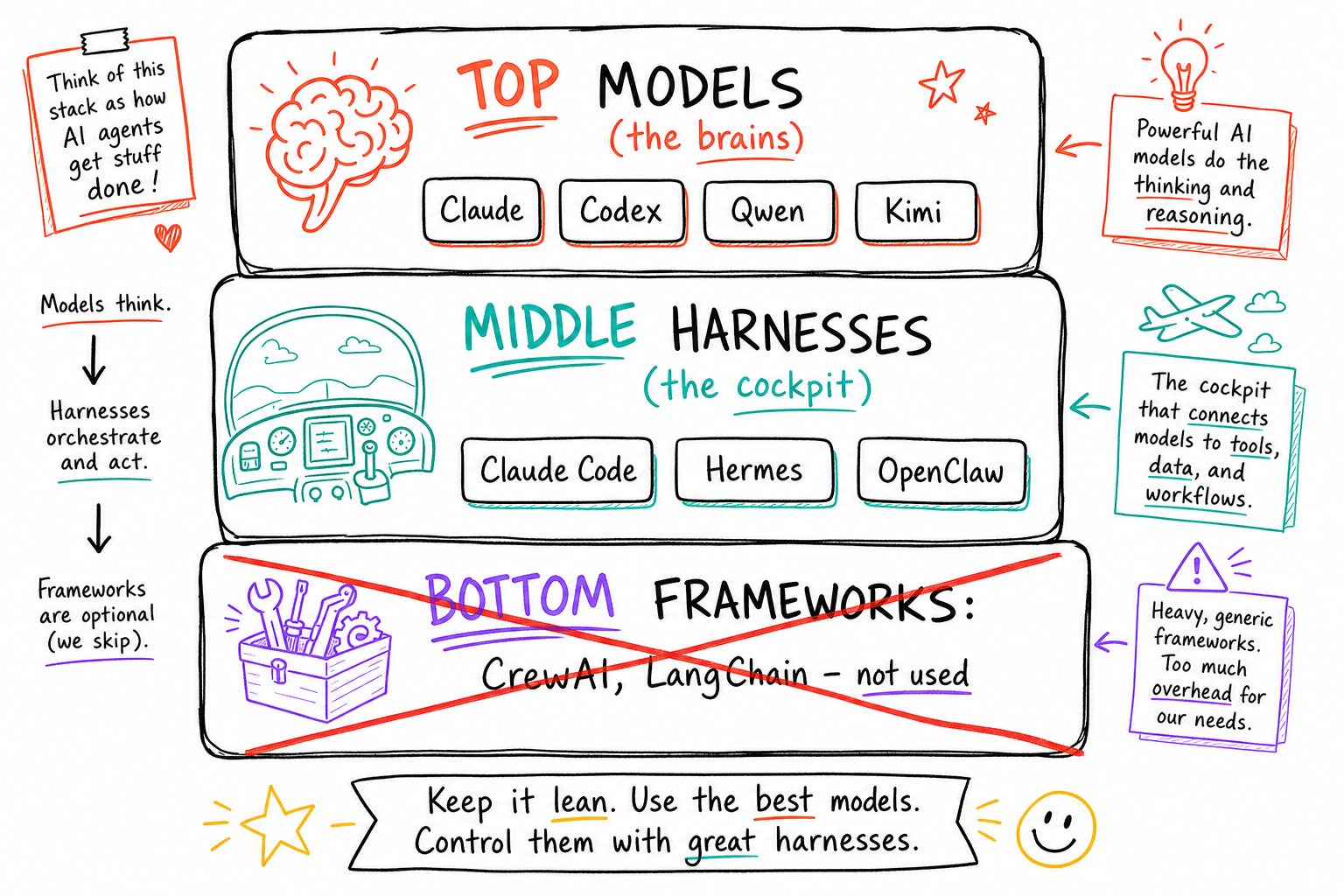
This is the one that trips everyone up. A model is the brain. A harness is the cockpit that drives a brain. A framework is a Python kit for building an agent from scratch in code. You run many models through many harnesses. You do NOT use the Python frameworks, and you do not need to.
- MODELS (brains): Claude, Codex/GPT, Qwen, Kimi, DeepSeek, Gemini, Fable.
- HARNESSES (cockpits): Claude Code, Codex CLI, Hermes, OpenClaw, claude-qwen, claude-kimi.
- FRAMEWORKS (code libs): CrewAI, LangChain. You do NOT use these.
How your fleet maps to the industry terms
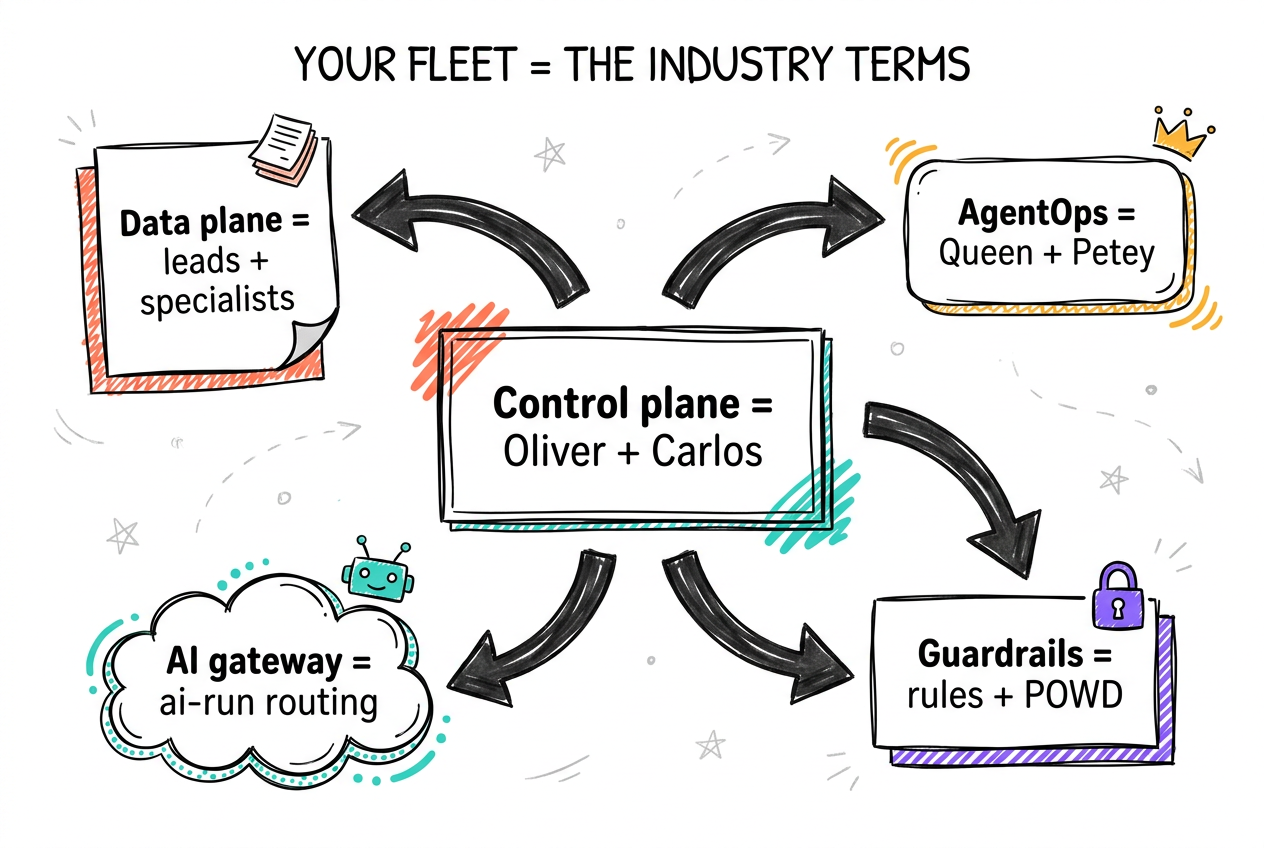
Your setup already IS a hierarchical multi-agent system with a control plane, AgentOps, an AI gateway, and guardrails. You just call the parts by your own names. Here is the translation, so when you read an enterprise AI article you see your own system in it.
- Oliver + Carlos = the control plane. Leads + specialists = the data plane.
- Queen + Petey = AgentOps + evaluation (check the work, bank the learnings).
- ai-run cascade + model-tier routing = your AI gateway.
- Hard rules + POWD + visual-QA + the [DONE] token = guardrails + HITL.
- 696 skills / ~50 agents = agent sprawl, governed by the master inventory + ONE Multica board.
What you should actually learn
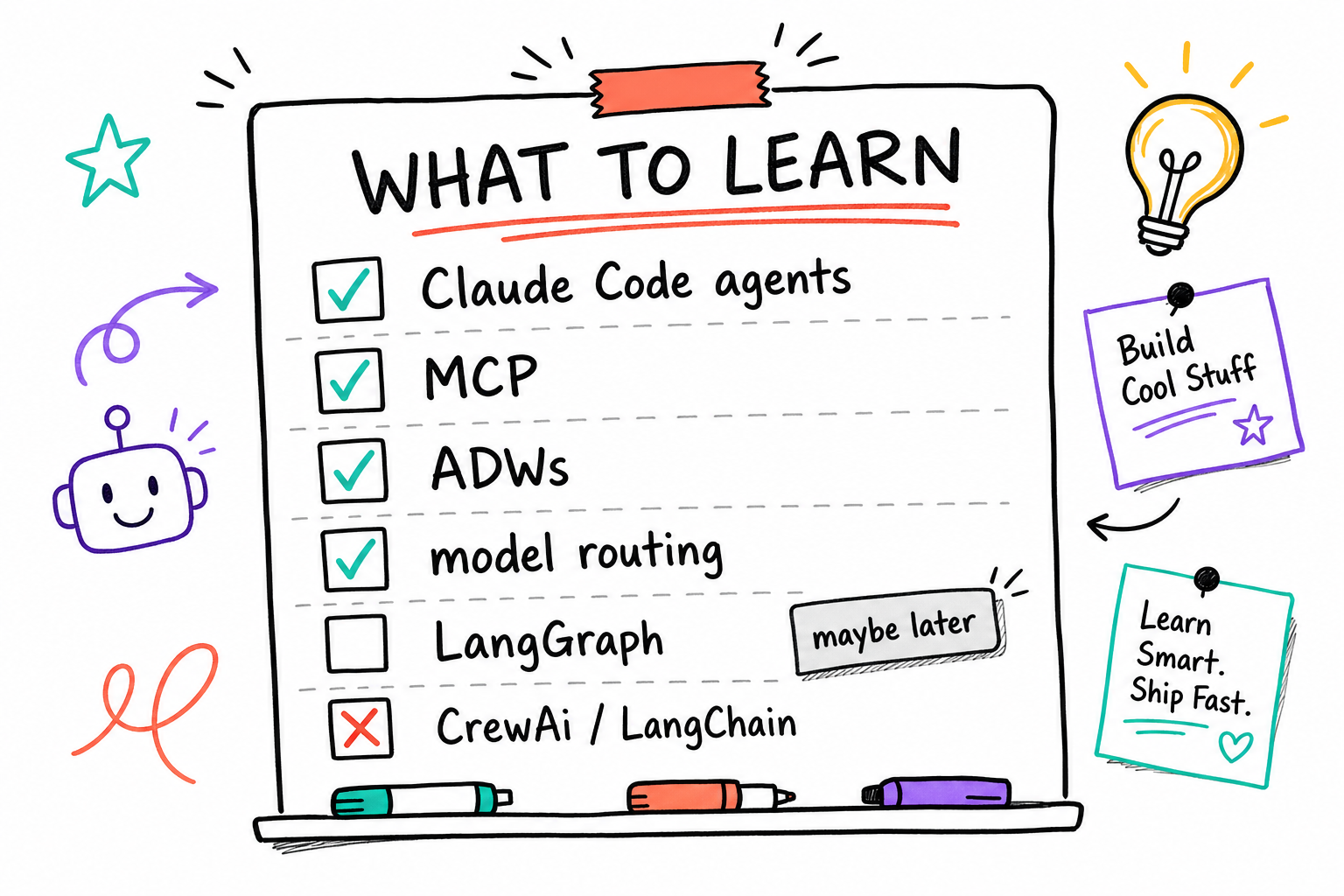
Honest answer: you do not need CrewAI or LangChain to run what you run. You already solved the hard problem (many models, many harnesses, one routing brain) without them. Go deeper on the things that ARE your system. Touch a Python framework only if a shipped product needs an agent baked into the code.
- YES: Claude Code agents + subagents. This is your daily cockpit.
- YES: MCP + ADWs + model-tier routing. This is your real framework.
- MAYBE LATER: LangGraph, only if MERA or a product bakes an agent into code.
- SKIP: CrewAI / LangChain as things to master. Relearning what you have.
What we built this session
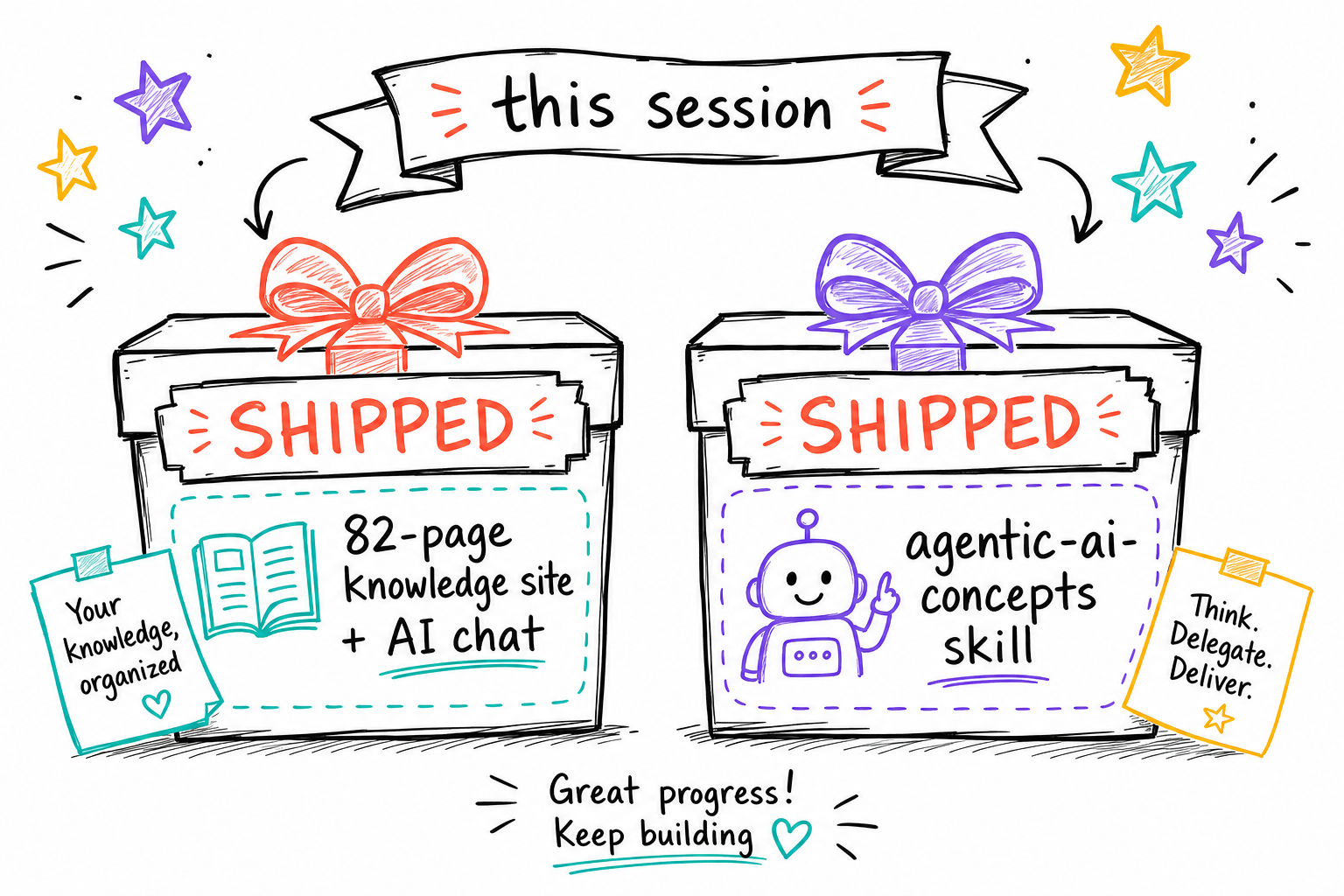
Two things shipped. A full searchable reference site on agentic AI (82 pages from IBM Think, with an AI chat that answers from the pages), and a reference skill your agents read to use the right vocabulary and to describe your own fleet correctly.
- 82-page Agentic AI knowledge site: https://ibm-agentic-ai-docs.vercel.app
- It has an AI chat that answers from the pages (real retrieval, with citations).
- New skill agentic-ai-concepts: the glossary + the fleet-mapping your agents read.
- This explainer is the friendly version of all of it.